For years, strength looked like carrying everything alone. Holding it together. Pushing through. Never asking for help. It is a definition many people inherit without noticing, and it can hold for a long time before the question finally surfaces: what if strength is something else entirely?

In Issue 01, Rahaf Kobeissi shares a journey shaped by self-awareness, therapy, growth, and the courage to let go of the beliefs that once felt necessary for survival. An executive coach, keynote speaker, and the author of RAW, she has spent years guiding leaders and couples back home to themselves. Her story is not about becoming someone new. It is about returning to yourself, which is a slower and less dramatic thing, and often a harder one.
The woman who wrote RAW, she says, is not the same woman she is today. Through therapy, self-awareness, and years of inner work, Kobeissi learned that healing is not about reinvention. It is about understanding the patterns that shaped you, the beliefs that protected you, the wounds that taught you to survive, and the courage required to let them go.
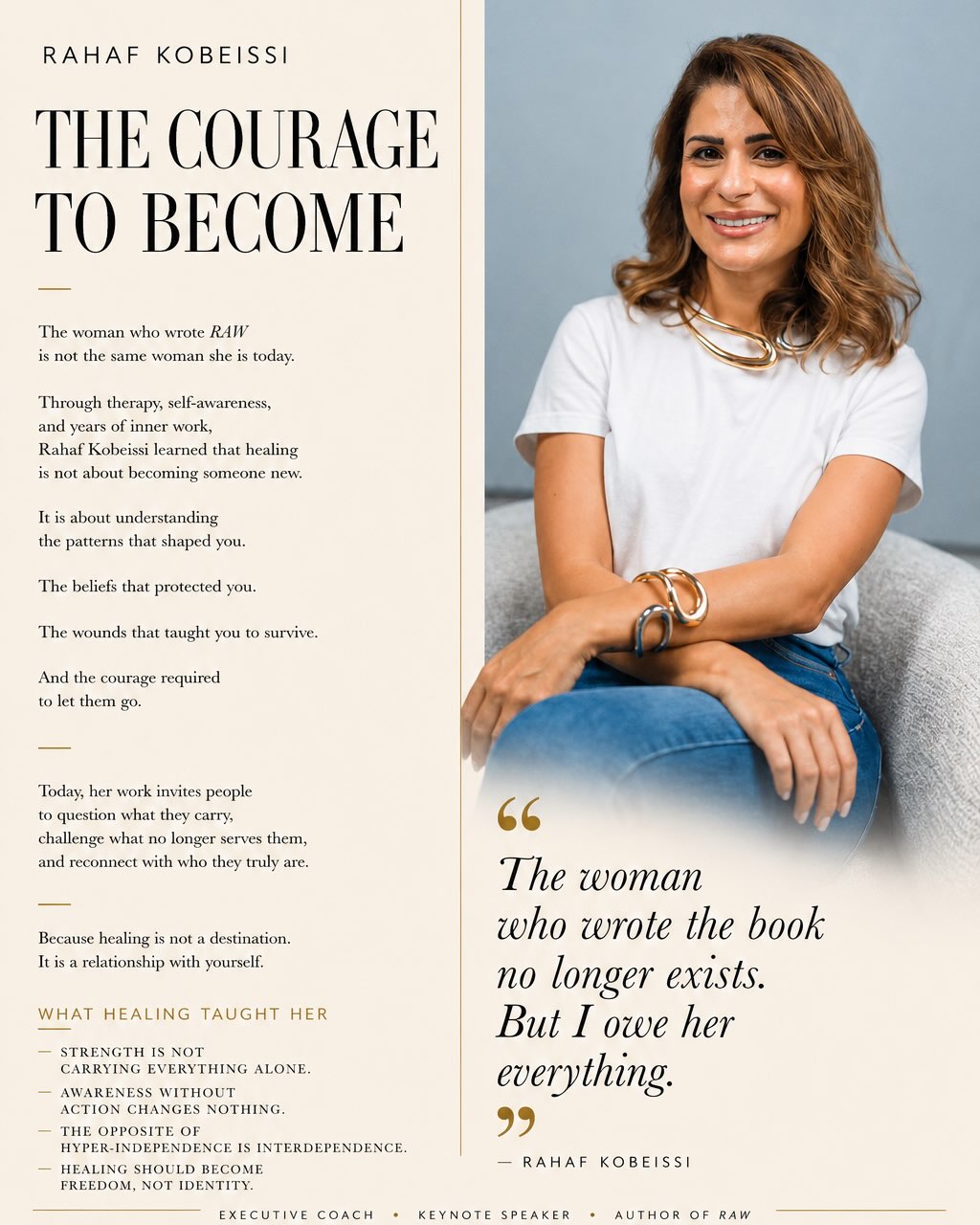
The woman who wrote the book no longer exists. But I owe her everything.
Rahaf Kobeissi
That line holds the whole arc. The person who learned to carry everything alone is gone, and Kobeissi does not mourn her so much as honor her, the way you honor a stage you needed in order to leave it. The book itself, she explains, began as an act of self-rescue before it became anything else.
RAW was never intended to be a story about wounds alone. It became a guide for those standing at the beginning of their own healing journey, a reminder that growth happens one step at a time, that no one has to walk through pain without direction, and that healing is possible. Today her work invites people to question what they carry, to challenge what no longer serves them, and to reconnect with who they truly are.
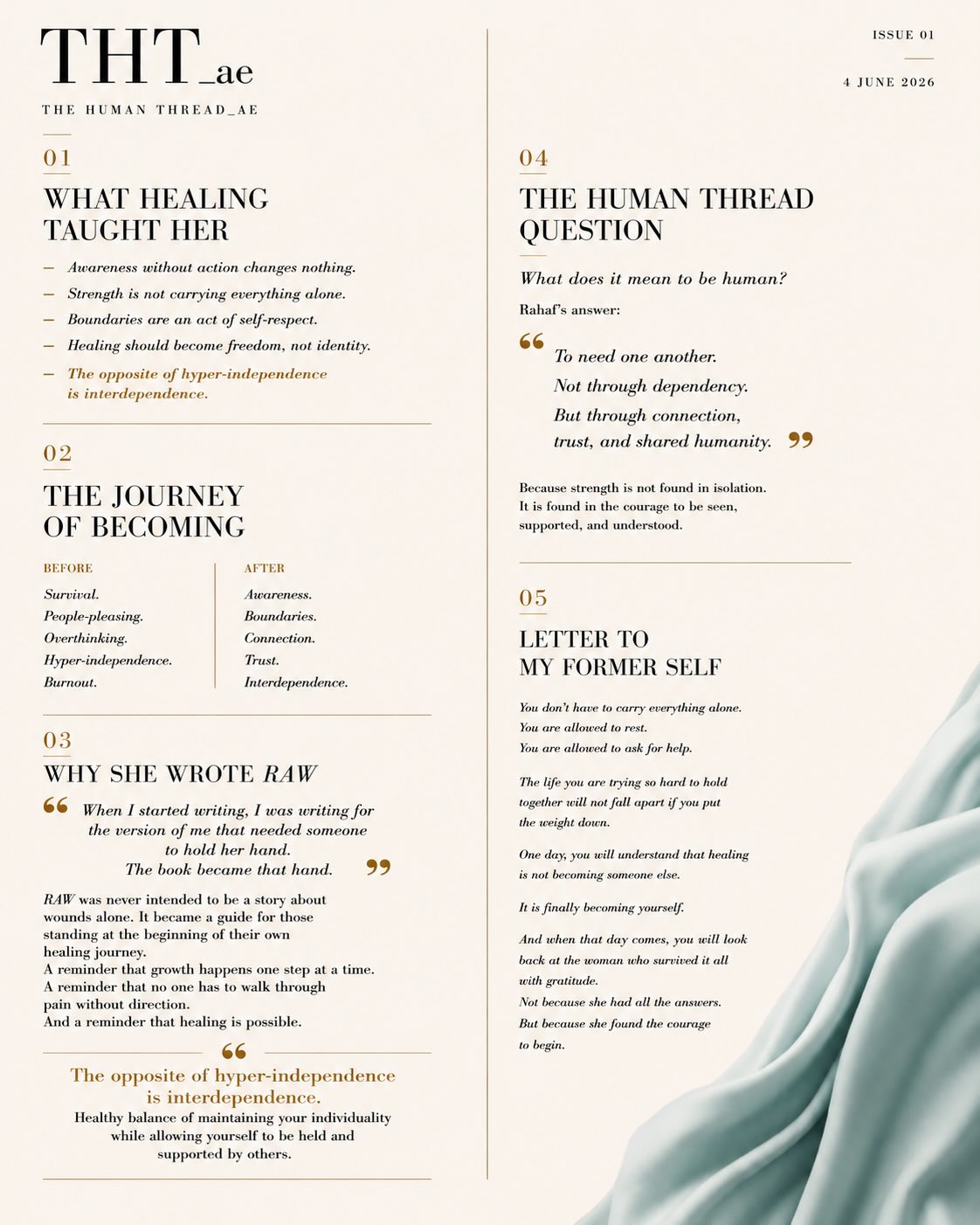
The shape of that change is plain when she lays it out. Before: survival, people-pleasing, overthinking, hyper-independence, burnout. After: awareness, boundaries, connection, trust, interdependence. The turn at the center of it is a question worth sitting with: what if healing begins the moment we allow ourselves to be supported? It reframes the whole architecture of self-reliance she had built, and suggests the walls were never the strength. The willingness to lower them was.
Because the opposite of hyper-independence is not weakness. It is interdependence. It is trust. It is connection. It is the slow remembering that we were never meant to do life alone, and that the company of others is not a failure of strength but a form of it. Healing, in her telling, is not a destination but a relationship with yourself, one that asks for awareness backed by action and boundaries held as an act of self-respect.
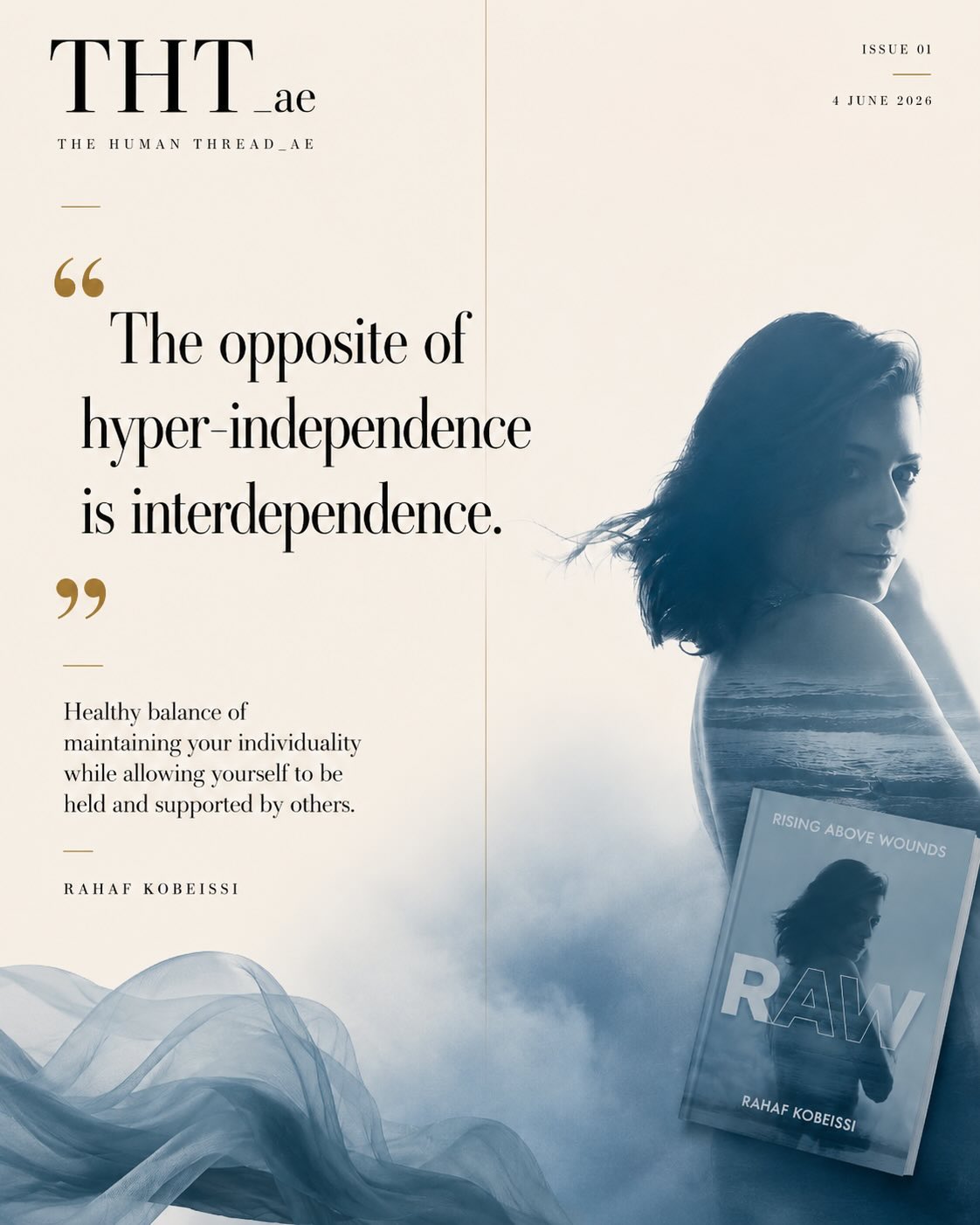
The opposite of hyper-independence is interdependence.
Rahaf Kobeissi
Asked what it means to be human, Kobeissi answers simply: to need one another, not through dependency, but through connection, trust, and shared humanity. Strength, she insists, is not found in isolation but in the courage to be seen, supported, and understood. It is the same courage she would offer her former self, who was allowed to rest, allowed to ask for help, and who would one day understand that healing is not becoming someone else. It is finally becoming yourself.