Some people spend their lives trying to escape the past. Louise Bourgeois spent hers understanding it. Across a career that ran more than seventy years, she returned again and again to the same material, memory, and asked what it was made of.
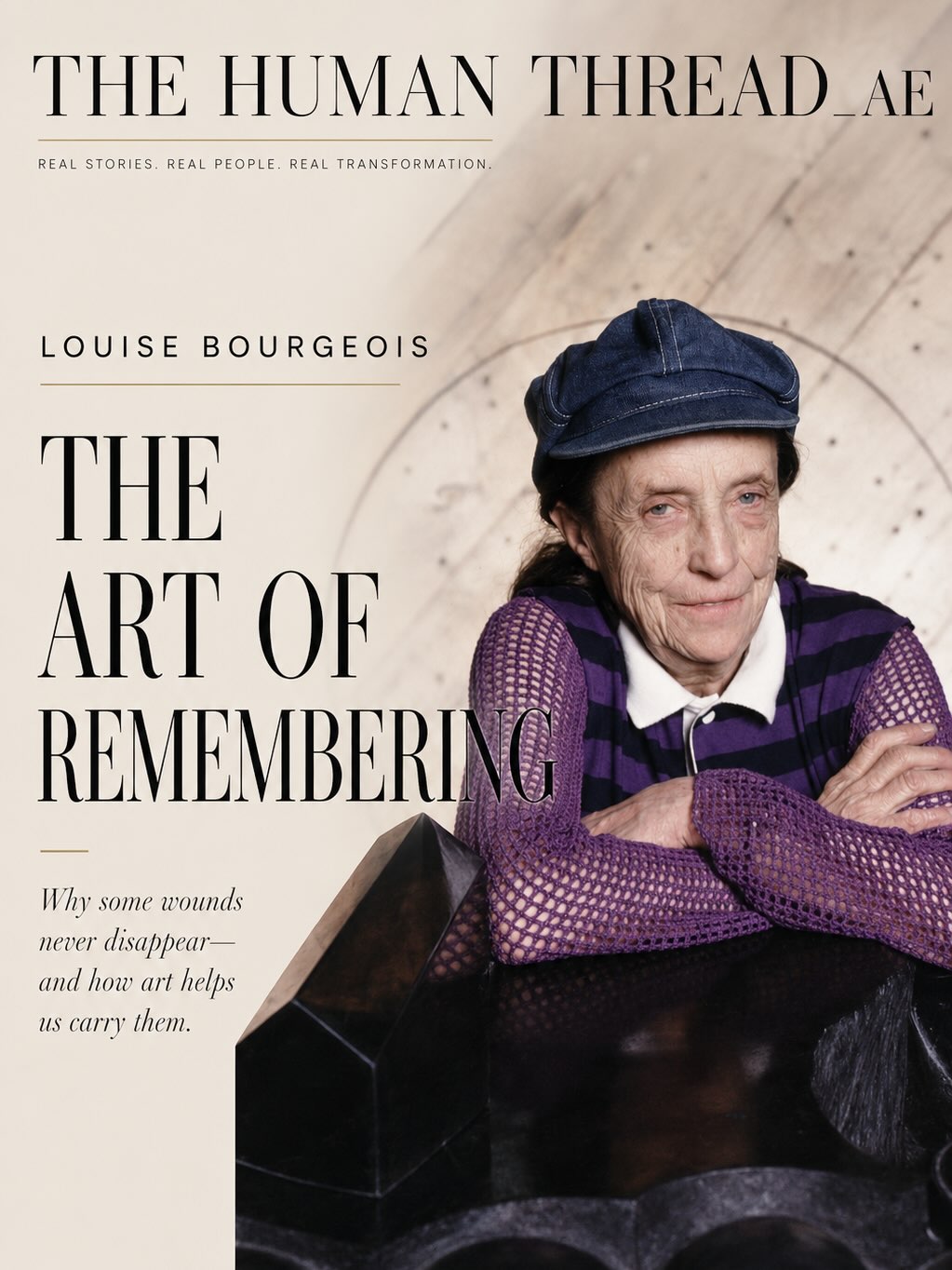
Born in Paris in 1911, Bourgeois transformed personal memories into powerful works that explored love, loss, vulnerability, and the complexities of family life. She did not arrive at a single style and stay there. She kept circling back to the themes that defined her: memory, identity, healing, and what it means to carry our stories through time.
For Bourgeois, art was never simply about creating beautiful objects. It was a way of giving shape to emotions that could not always be expressed in words. There is a particular courage in this. It is easier to make work that looks away from pain than work that turns toward it. Bourgeois turned toward it, again and again, and in doing so gave form to the parts of experience most people prefer to keep unspoken.
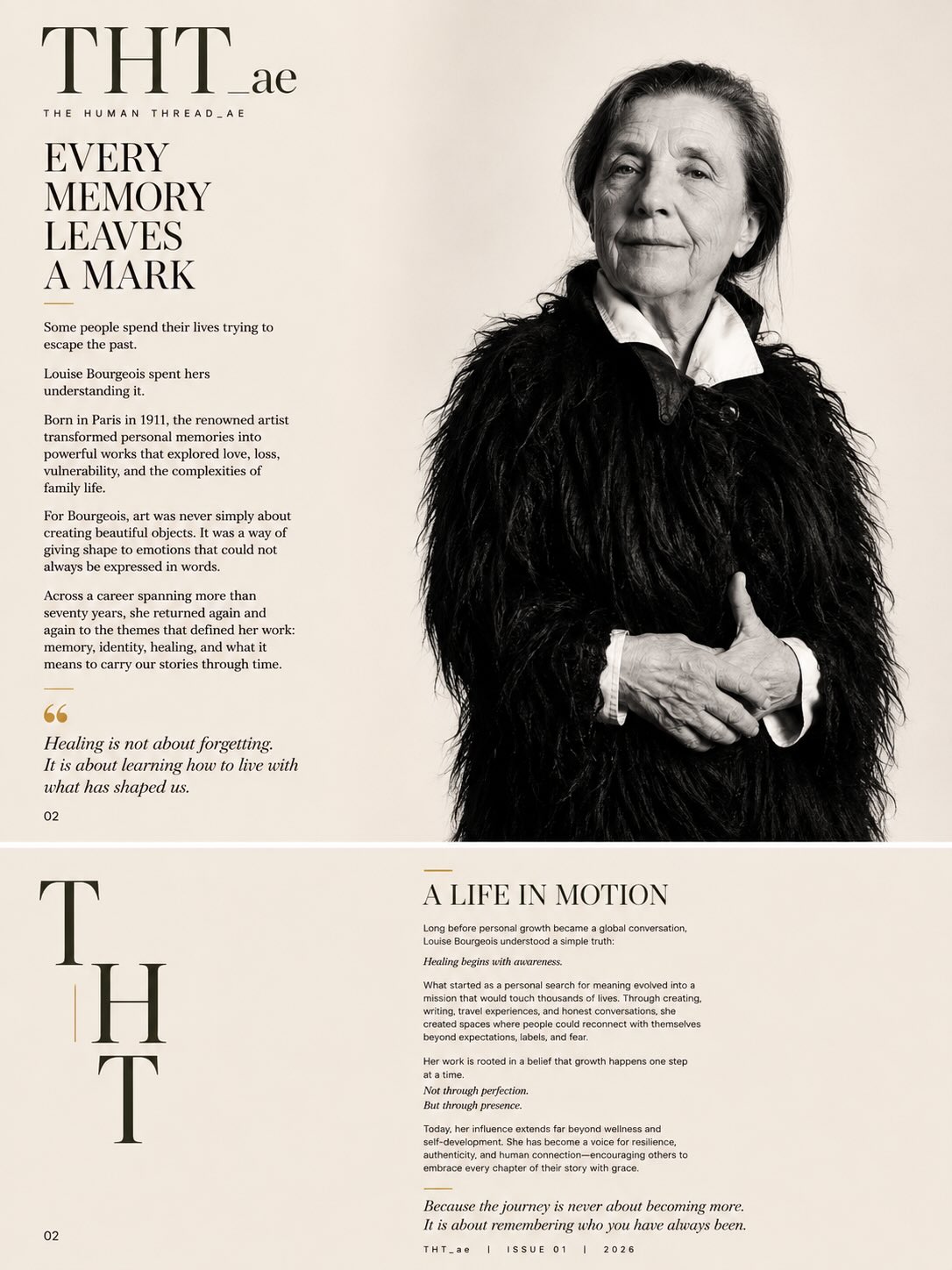
Healing is not about forgetting. It is about learning how to live with what has shaped us.
Nowhere is that clearer than in Maman. Created in 1999, the spider became one of her most celebrated works. Standing over nine metres tall, it appears powerful and intimidating, yet Bourgeois described it as a tribute to her mother, a woman she remembered as patient, intelligent, protective, and resilient. Some people see a spider and think of fear. Bourgeois saw her mother.
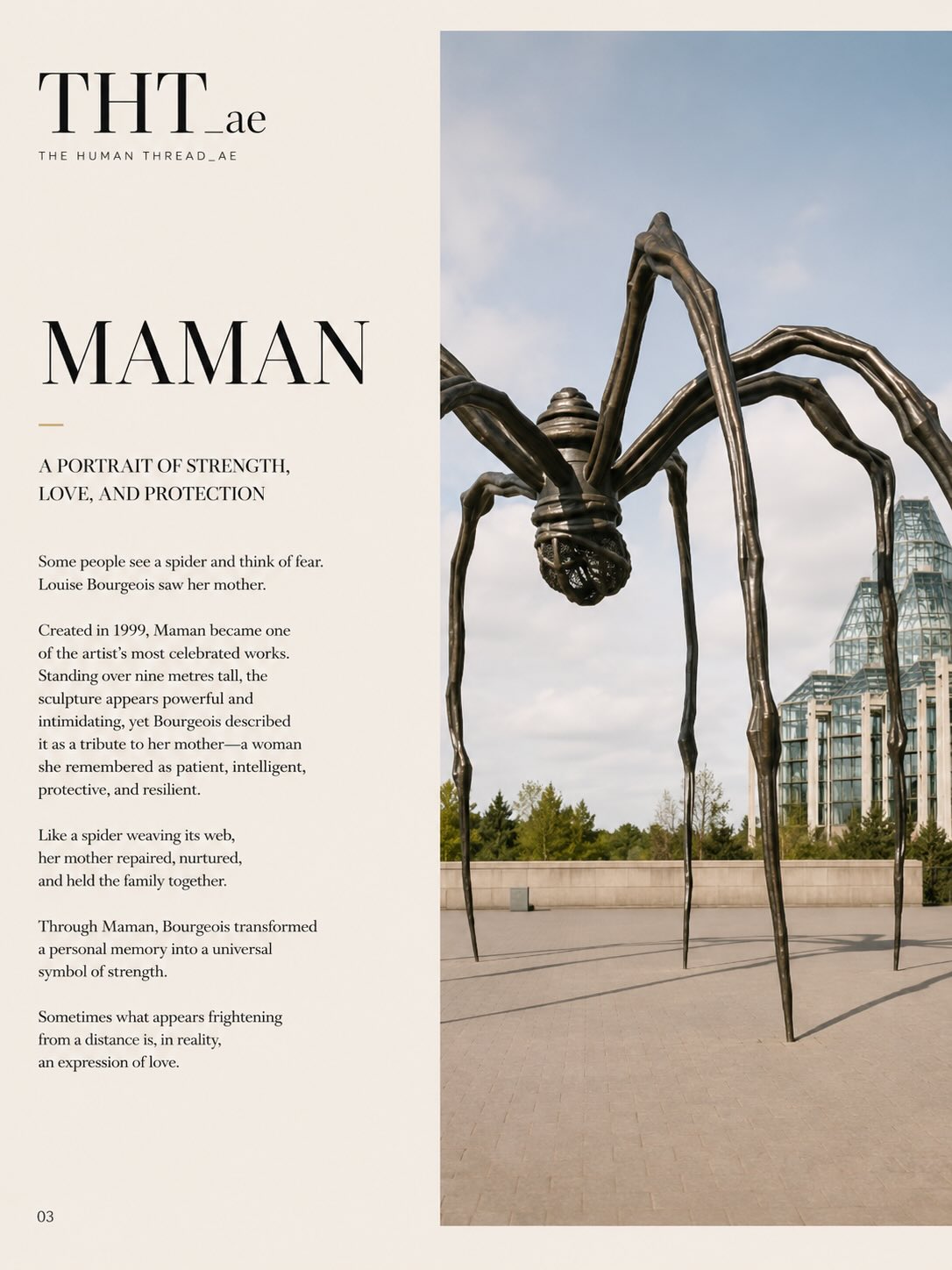
Like a spider weaving its web, her mother repaired, nurtured, and held the family together. Through Maman, Bourgeois transformed a private memory into a universal symbol of strength. Sometimes what appears frightening from a distance is, in reality, an expression of love, and the sculpture asks its viewers to walk close enough to see the difference.
In a world that often encourages us to move on, Bourgeois reminds us that healing is not about forgetting. It is about learning how to carry our stories with grace. The memory is not erased; it is held differently, with less fear and more understanding. That is the art of remembering, and it is the quiet instruction her work leaves behind.