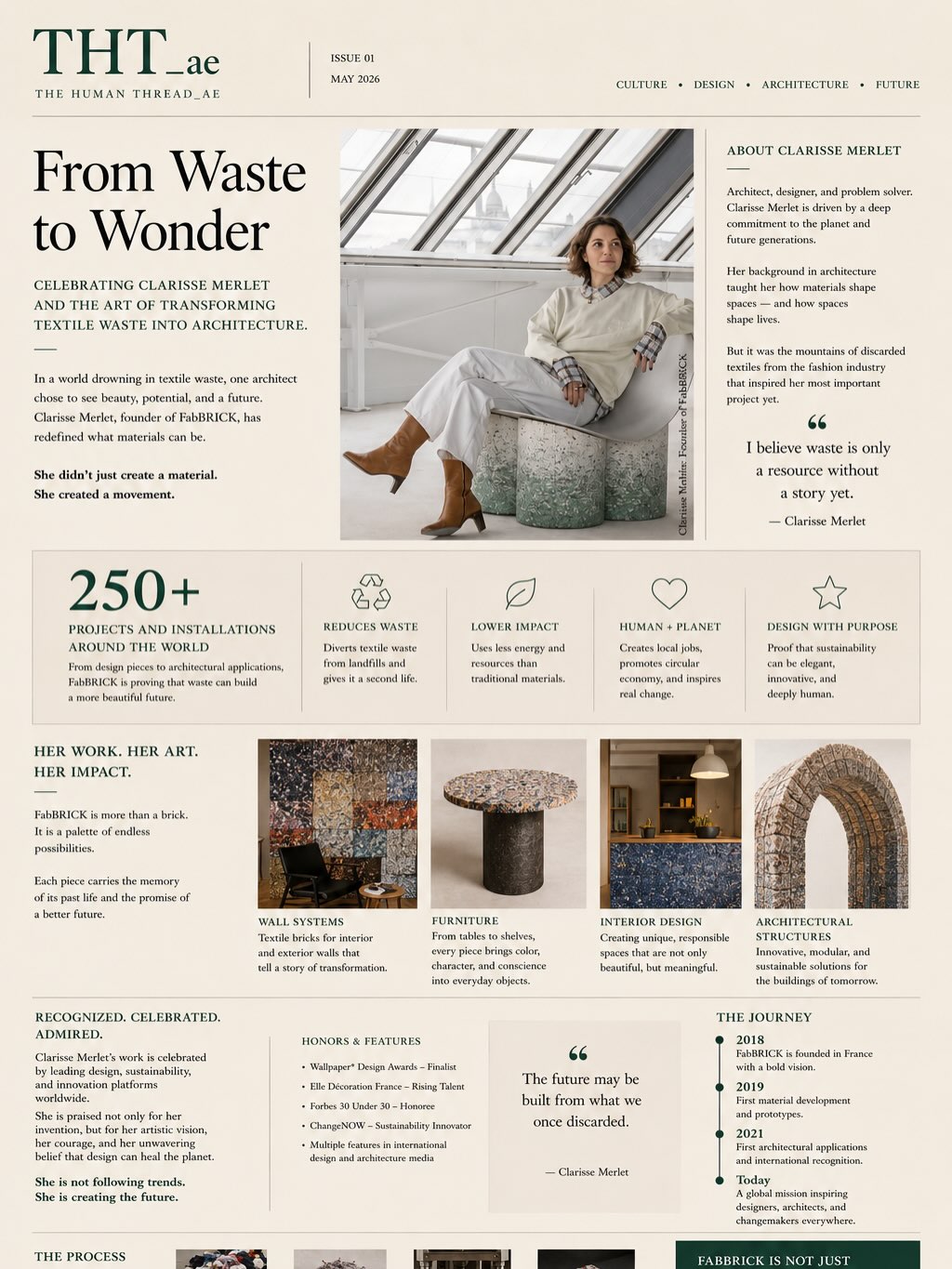
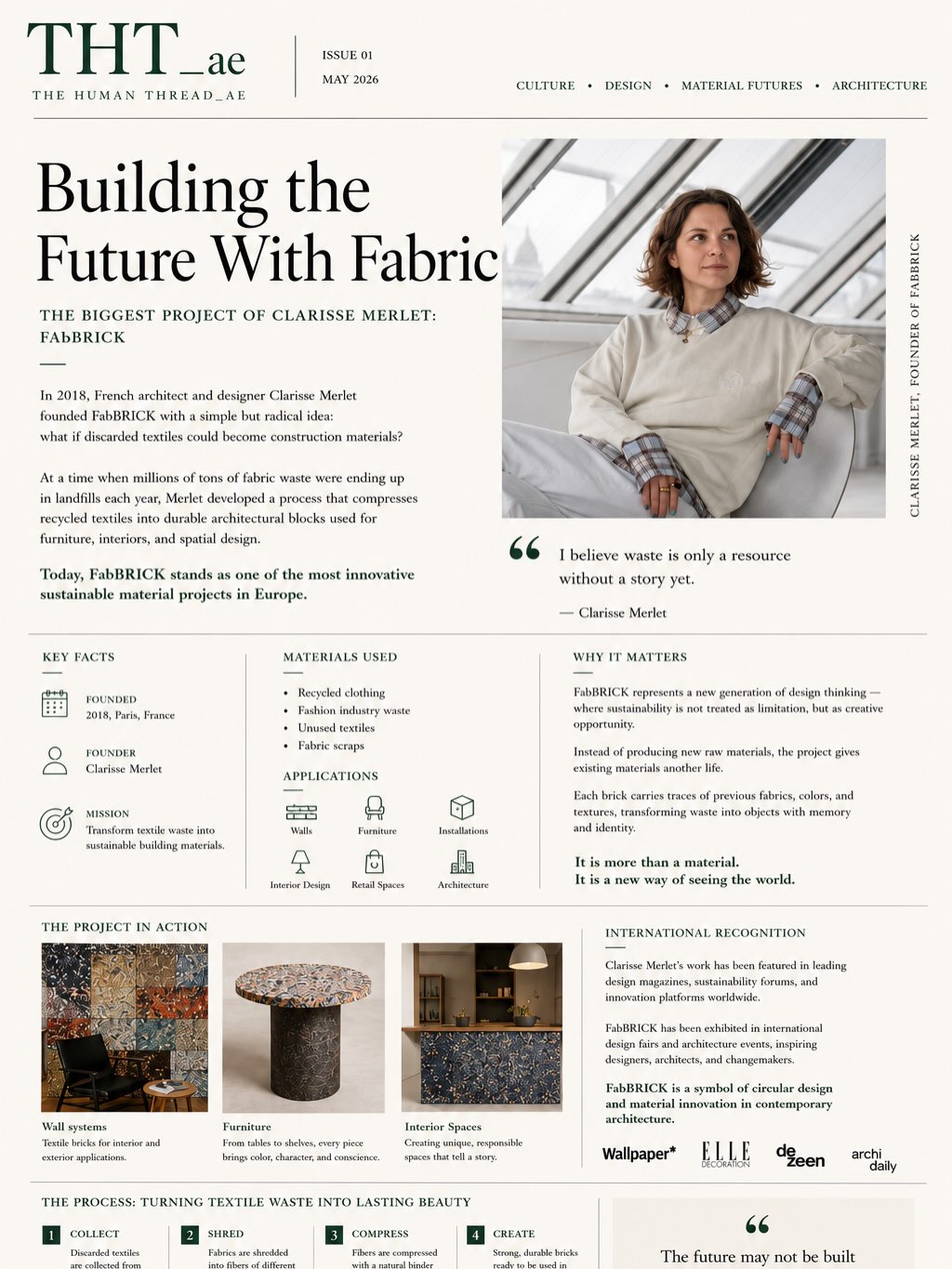
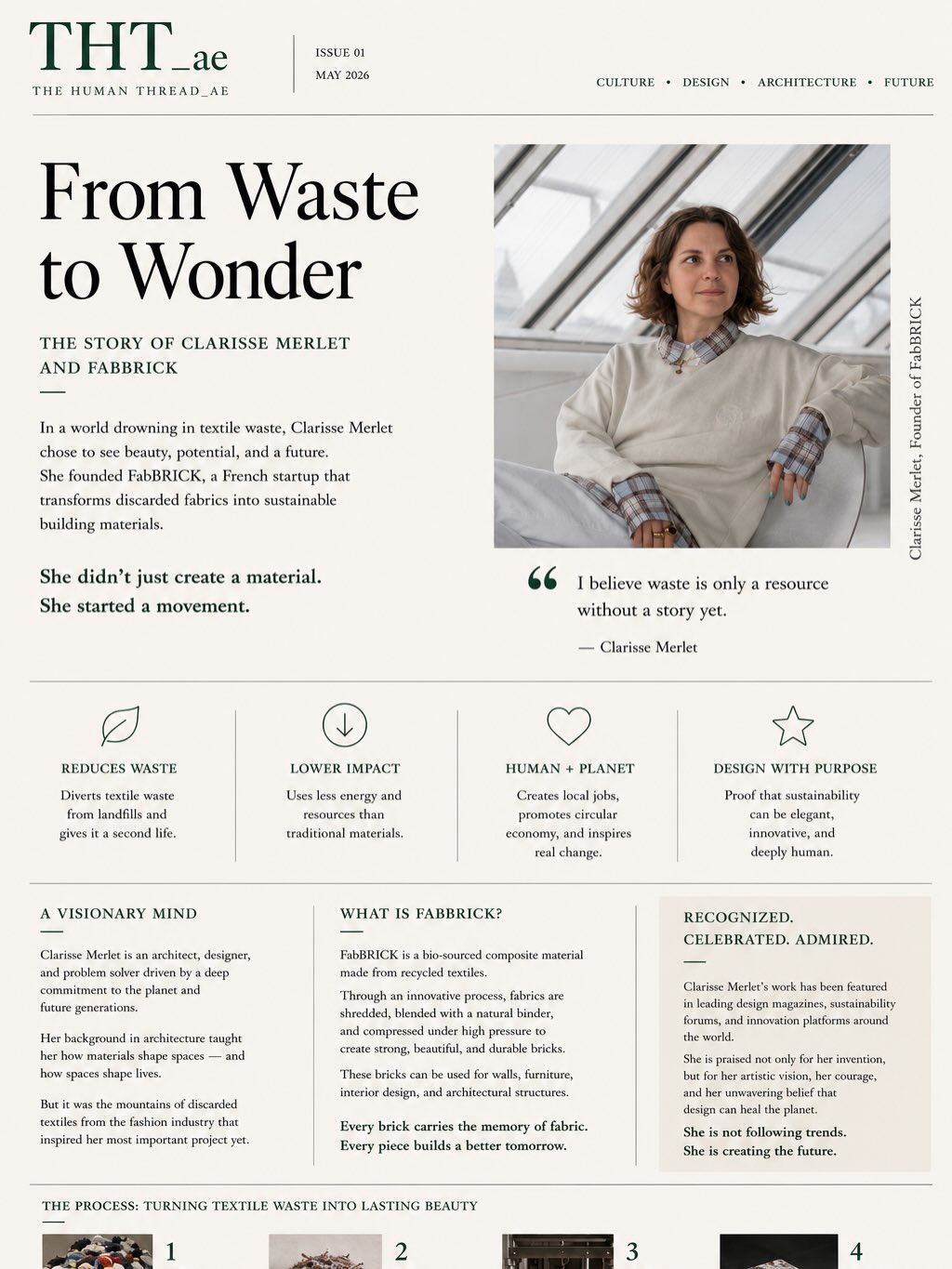
What if the future of architecture could begin with what we throw away? In a world drowning in textile waste, Clarisse Merlet chose to see beauty, potential, and a future. The French architect and designer, founder of FabBRICK, has redefined what discarded materials can become. She didn't just create a material. She started a movement.
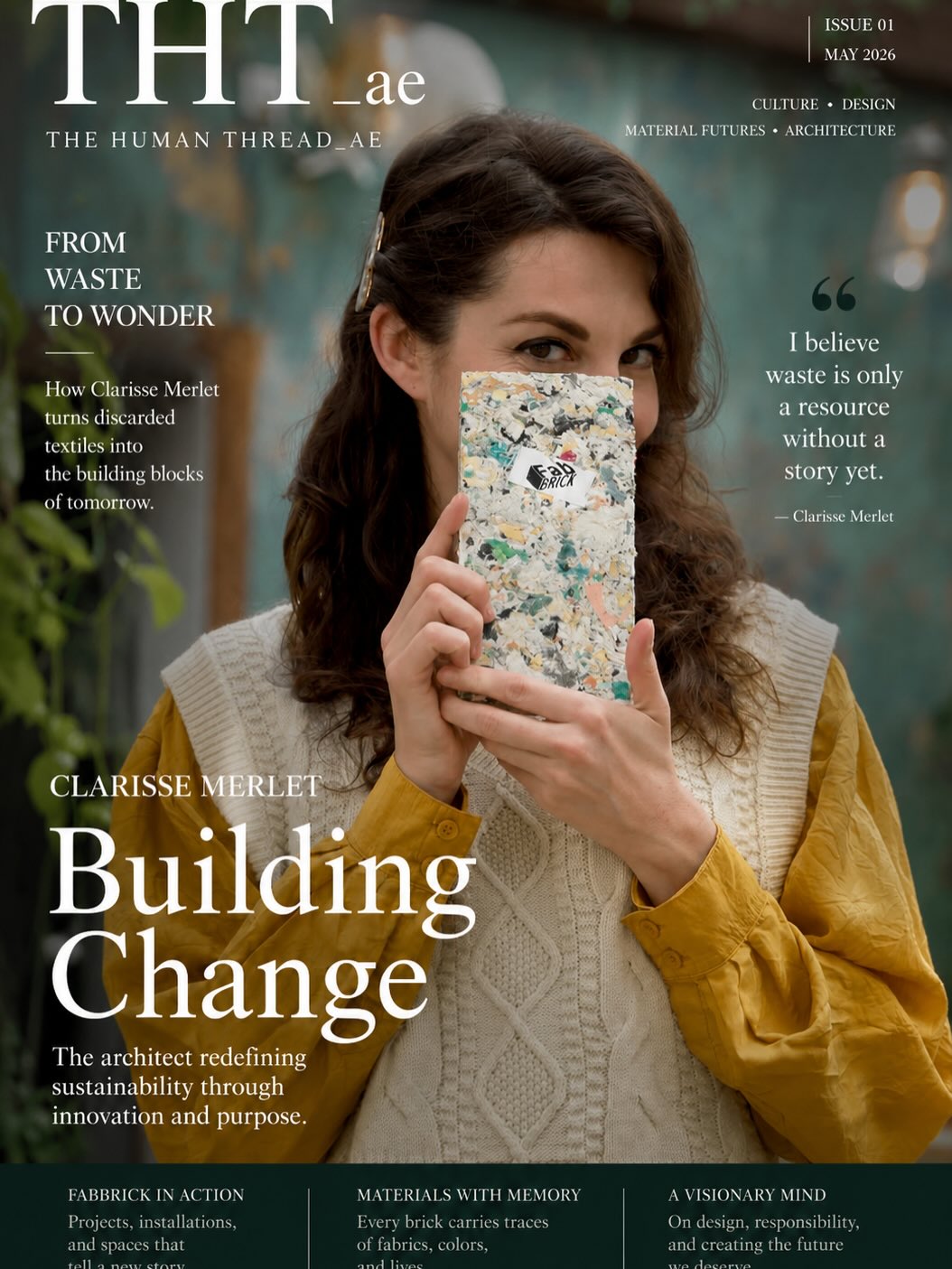
Merlet is an architect, designer, and problem solver driven by a deep commitment to the planet and future generations. Her background in architecture taught her how materials shape spaces, and how spaces shape lives. But it was the mountains of discarded textiles from the fashion industry that inspired her most important project yet.
In 2018, in Paris, she founded FabBRICK with a simple but radical idea: what if discarded textiles could become construction materials? At a time when millions of tons of fabric waste were ending up in landfills each year, Merlet developed a process that compresses recycled textiles into durable architectural blocks used for furniture, interiors, and spatial design. Today, FabBRICK stands as one of the most innovative sustainable material projects in Europe.
I believe waste is only a resource without a story yet.
Clarisse Merlet
FabBRICK is a bio-sourced composite material made from recycled textiles: recycled clothing, fashion industry waste, unused fabrics, and scraps. The process is direct. Fabrics are collected, shredded into fibers, blended with a natural binder, and compressed under high pressure into strong, beautiful, durable bricks. Those bricks become wall systems, furniture, interior design, retail spaces, and architectural structures. Each one carries traces of previous fabrics, colors, and textures, transforming waste into objects with memory and identity.
The argument underneath the work is quiet but radical. FabBRICK represents a generation of design thinking where sustainability is not treated as limitation, but as creative opportunity. Instead of producing new raw materials, the project gives existing ones another life. It reduces waste by diverting textiles from landfill, lowers impact by using less energy than traditional materials, and creates local jobs while promoting a circular economy. It is proof that sustainability can be elegant, innovative, and deeply human.
Recognition has followed. Merlet's work has been featured in leading design magazines, sustainability forums, and innovation platforms worldwide, with honors including a Wallpaper* Design Awards finalist place, Elle Decoration France's Rising Talent, a Forbes 30 Under 30 listing, and a ChangeNOW sustainability nod. She is praised not only for her invention, but for her artistic vision, her courage, and her belief that design can heal the planet.
The future may be built from what we once discarded.
Clarisse Merlet
For the cover story of Issue 01, FabBRICK reads as a small, stubborn argument about purpose. Building change does not always mean building more. Sometimes it means building from what is already here, letting the leftover become the foundation, and treating waste as a resource that was only ever waiting for its story. She is not following trends. She is creating the future.