
Before it became a cinematic shorthand, it was simply a building rising above New York in 1902: a narrow wedge of stone where two avenues meet, shaped by the triangle of land it was given. After more than a century in the shadows, the city's most recognizable triangular landmark now glows every night.
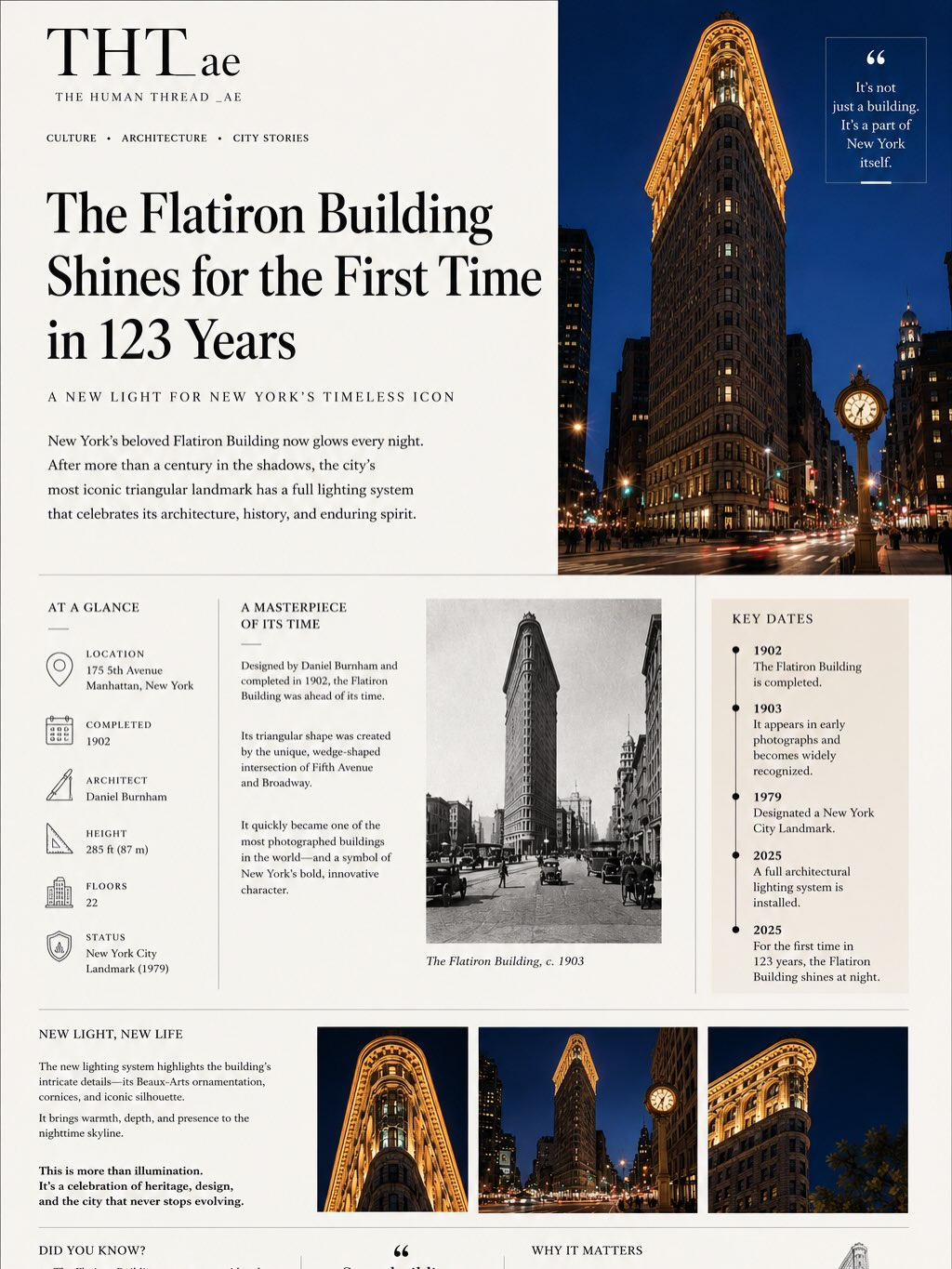
Designed by Daniel Burnham and completed in 1902, the Flatiron Building was ahead of its time. At 285 feet and twenty-two floors, its triangular shape was created by the unique, wedge-shaped intersection of Fifth Avenue and Broadway, a narrow corner where the street grid forces a sharp angle. A design problem became a design signature. It quickly grew into one of the most photographed buildings in the world and a symbol of New York's bold, innovative character, and in 1979 it was designated a New York City Landmark.
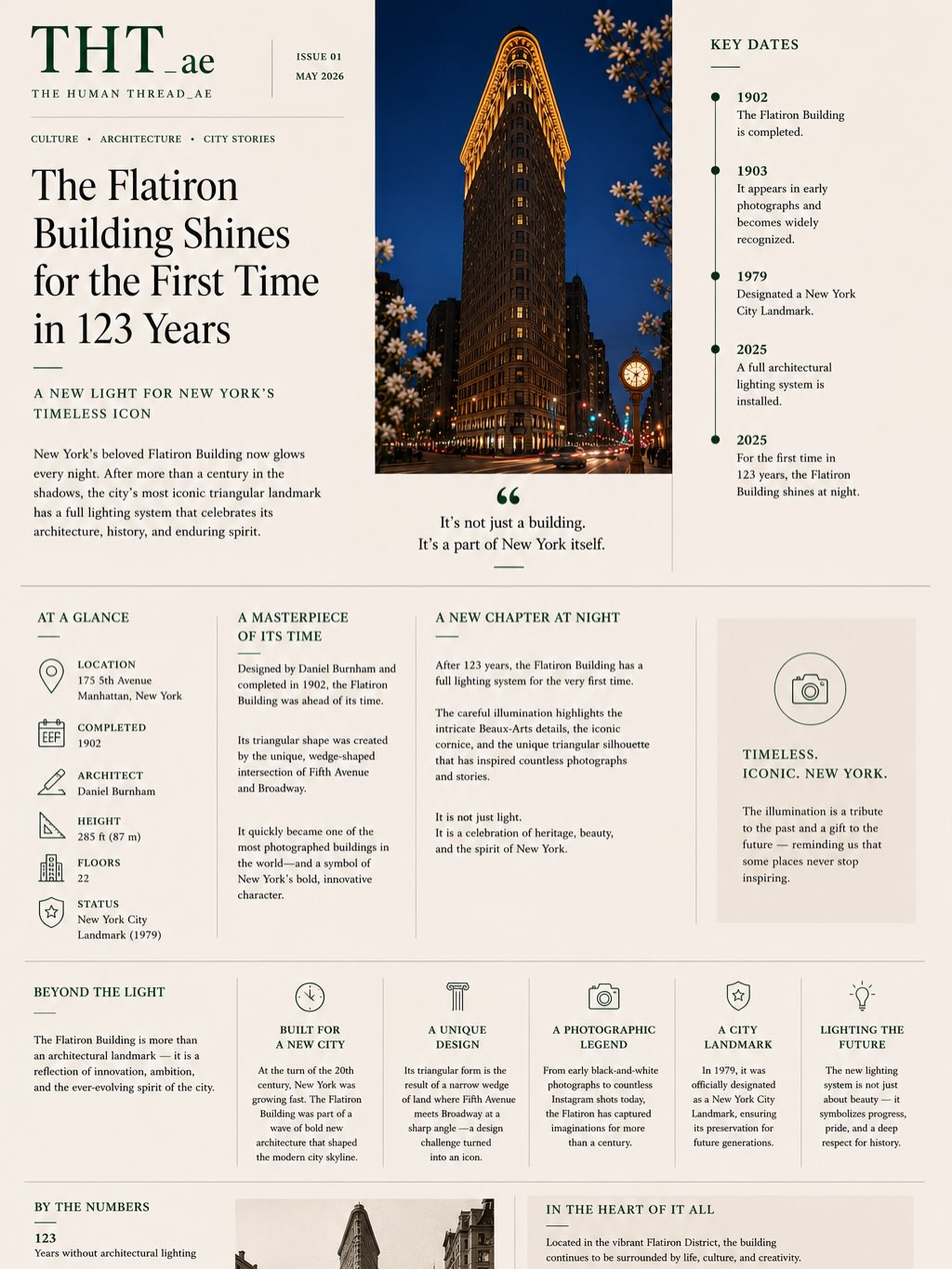
For the first time in 123 years, a full architectural lighting system now traces the building after dark. The careful illumination highlights its Beaux-Arts ornamentation, its cornices, and the silhouette that has inspired countless photographs and stories. It brings warmth, depth, and presence to the nighttime skyline. This is more than illumination. It is a celebration of heritage, design, and a city that never stops evolving.
The building's second life has always been on screen. From classic films to modern blockbusters, the Flatiron has appeared in more than 250 films and television shows since the early days of cinema, instantly recognizable, perfect for an establishing shot, a way of saying New York without naming it. It turns up in Annie Hall and Vertigo, in Batman Forever and The Amazing Spider-Man, in Doctor Strange and Spider-Man: Across the Spider-Verse. For over a century it has stood in the background of thousands of scenes, silently witnessing fictional lives unfold.
Some buildings play a role. The Flatiron plays history.
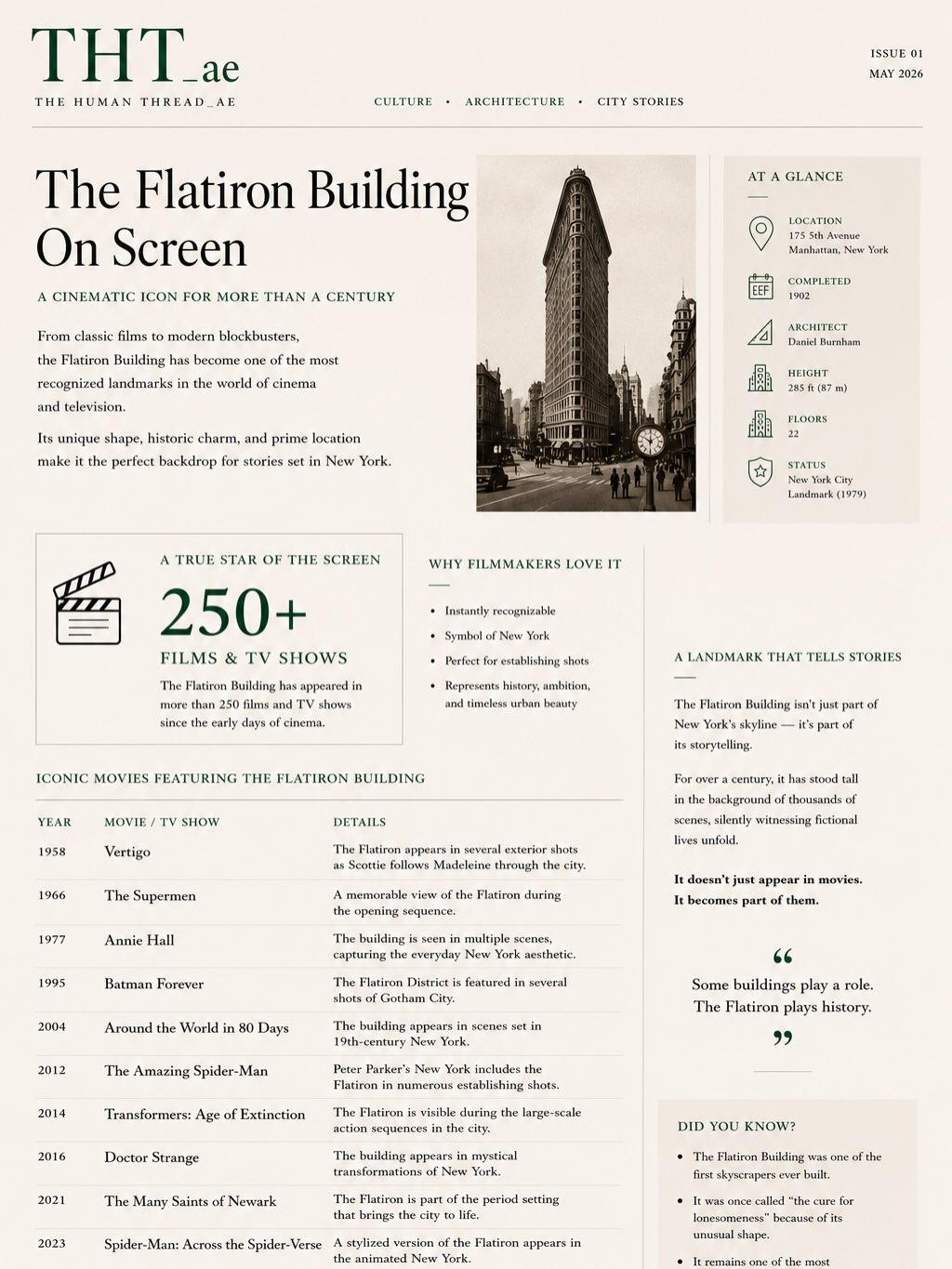
That is the strange afterlife of a good building. The Flatiron was designed to occupy a difficult corner; it ended up occupying the imagination. The new light does not change the shape so much as remind the city it is still there, a landmark of memory, design, and storytelling, and a reminder that some places never stop inspiring.