Look at the profile face long enough and the stillness starts to feel deliberate. The eye held wide, the line of the jaw fixed, the adornment set with care. Nothing here is incidental. Egyptian art was never just decoration; it was a language of beauty, power, protection, and memory.
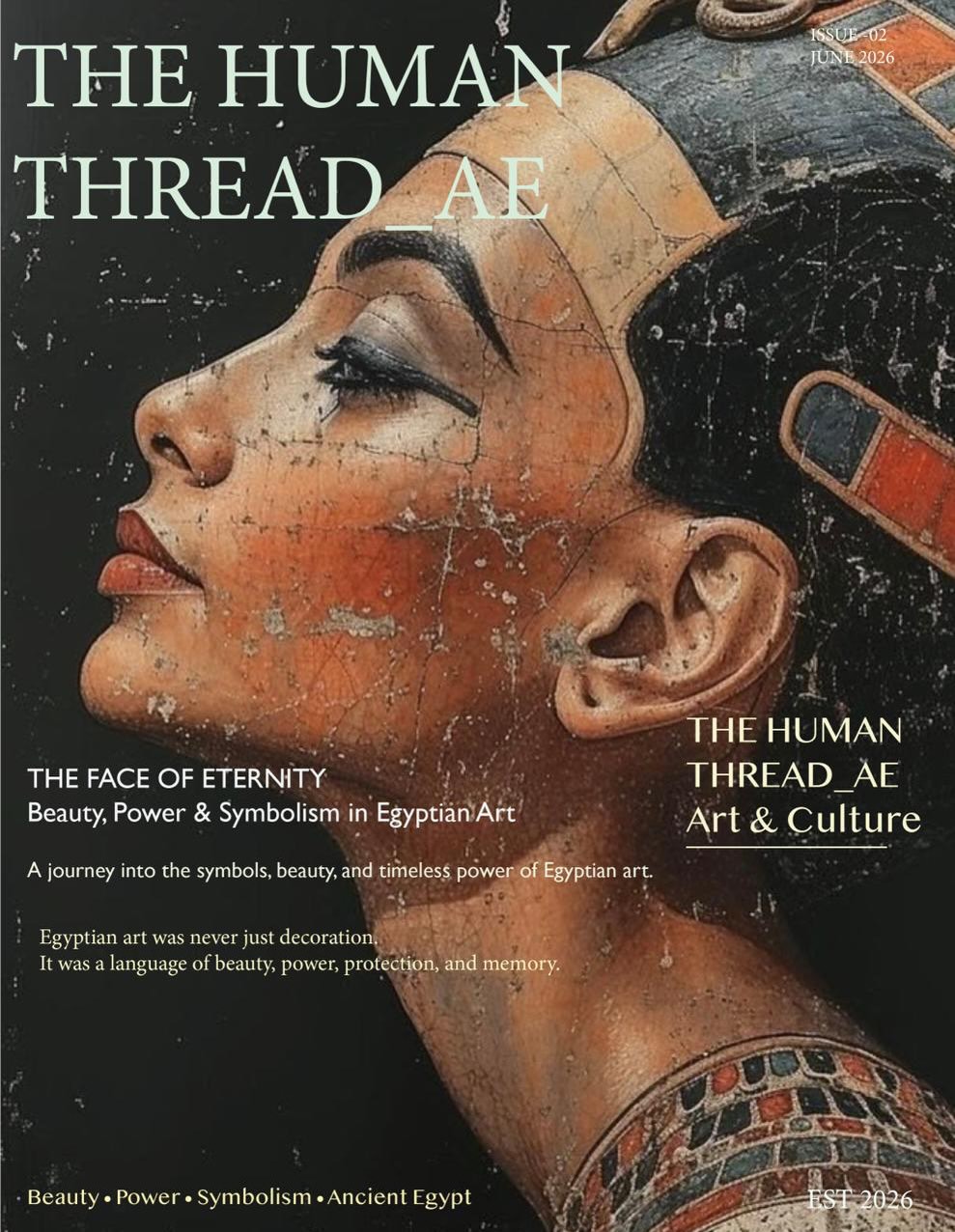
What makes the work so powerful is its calmness. The faces do not need to speak loudly. They stand still, proud, and eternal, as if time itself had learned to respect them. That composure is not absence; it is a kind of certainty, the look of figures made by people who assumed they would still be seen centuries on.
The symbols carried soul as much as form. The cobra was not only an ornament; it stood for protection, royalty, and divine strength. Gold, blue, red, and black were not only colors. They were messages, a vocabulary in which every choice said who a figure was and what kept them safe. To read the image is to read a code that assumed it would stay legible.
Egyptian art turned beauty into memory, and memory into eternity.
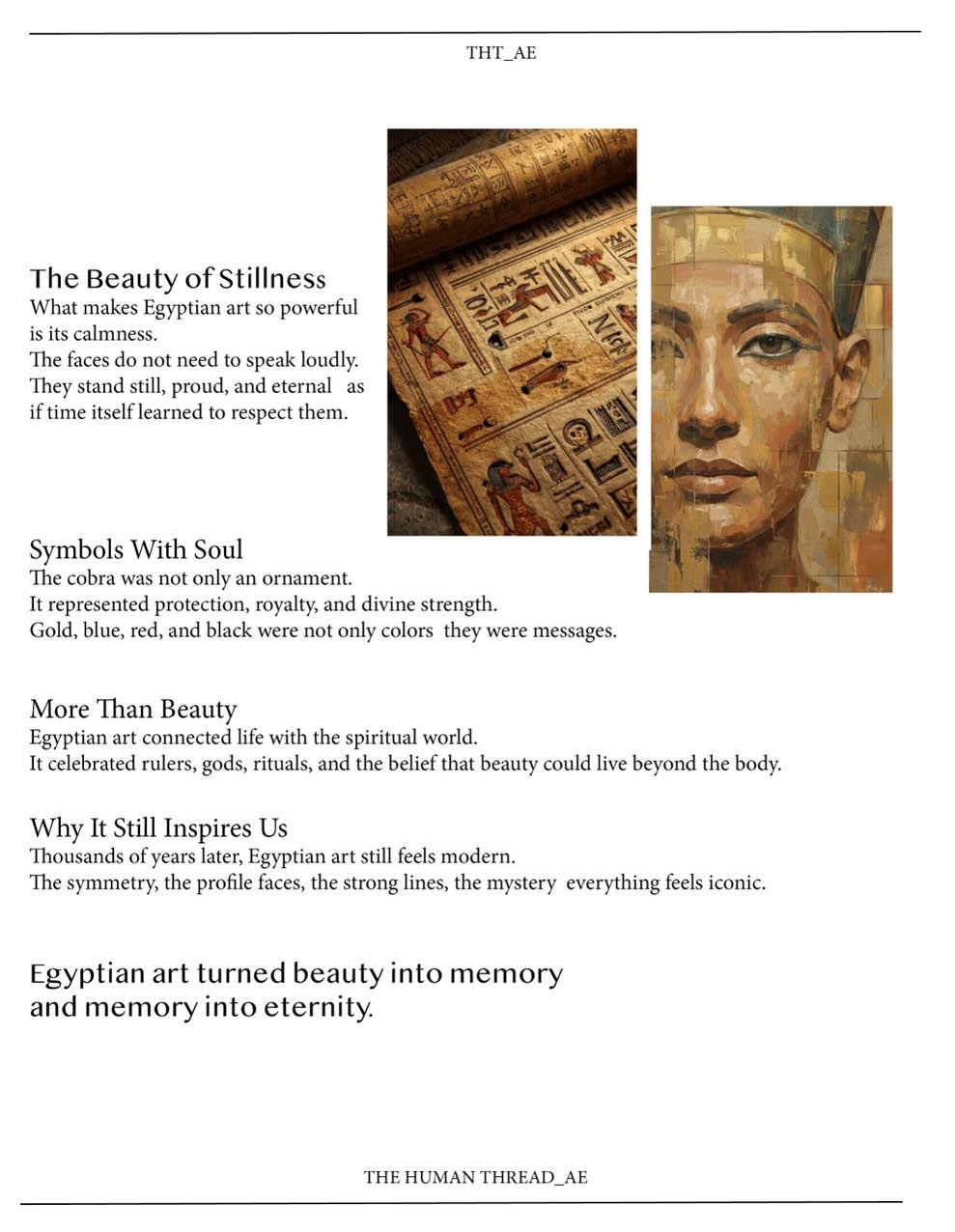
It was always more than beauty. Egyptian art connected life with the spiritual world, celebrating rulers, gods, and rituals, and the belief that beauty could live beyond the body. The line was drawn not to please the eye for a season but to hold a meaning steady against time. Adornment was argument; the surface was a record.
Thousands of years later, it still feels modern. The symmetry, the profile faces, the strong lines, the held mystery: everything reads as deliberate, complete, made to last. This is what the face of eternity offers a contemporary viewer, a timeless language of beauty, symbolism, and power. The work was made to be remembered, and it was. We are still looking.