Before the pearls, there was survival. Before Coco Chanel became a symbol of luxury, she was Gabrielle Chanel, a girl shaped by loss, discipline, and reinvention. The elegance the world now attaches to her name was not inherited. It was built.
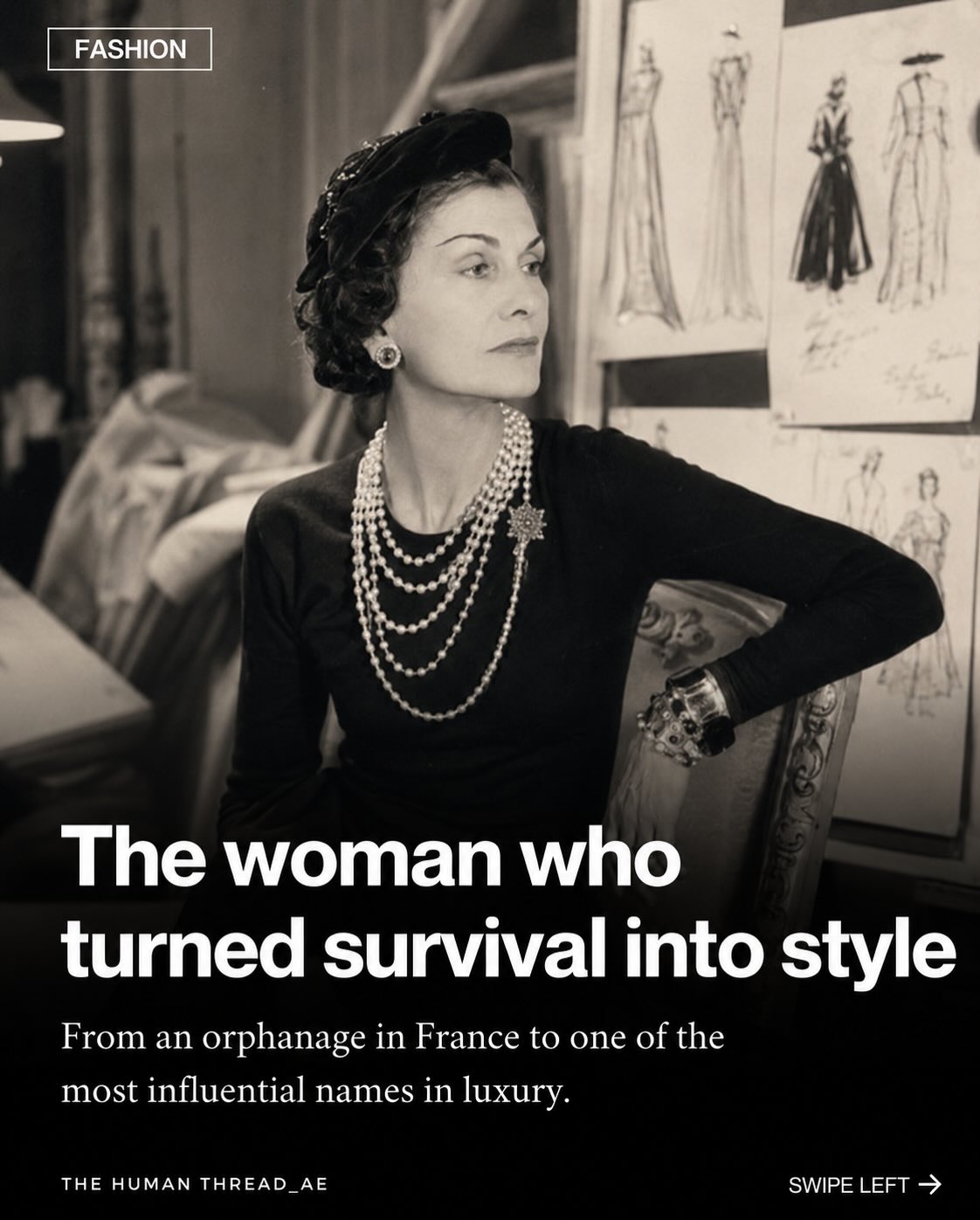
Born in 1883 and raised in poverty, she spent part of her childhood in a convent-run orphanage after her mother's death. There she learned to sew, a quiet skill that would become the foundation of her future. It was an unglamorous beginning for a name that would come to mean glamour, and that distance between the two is the whole story.
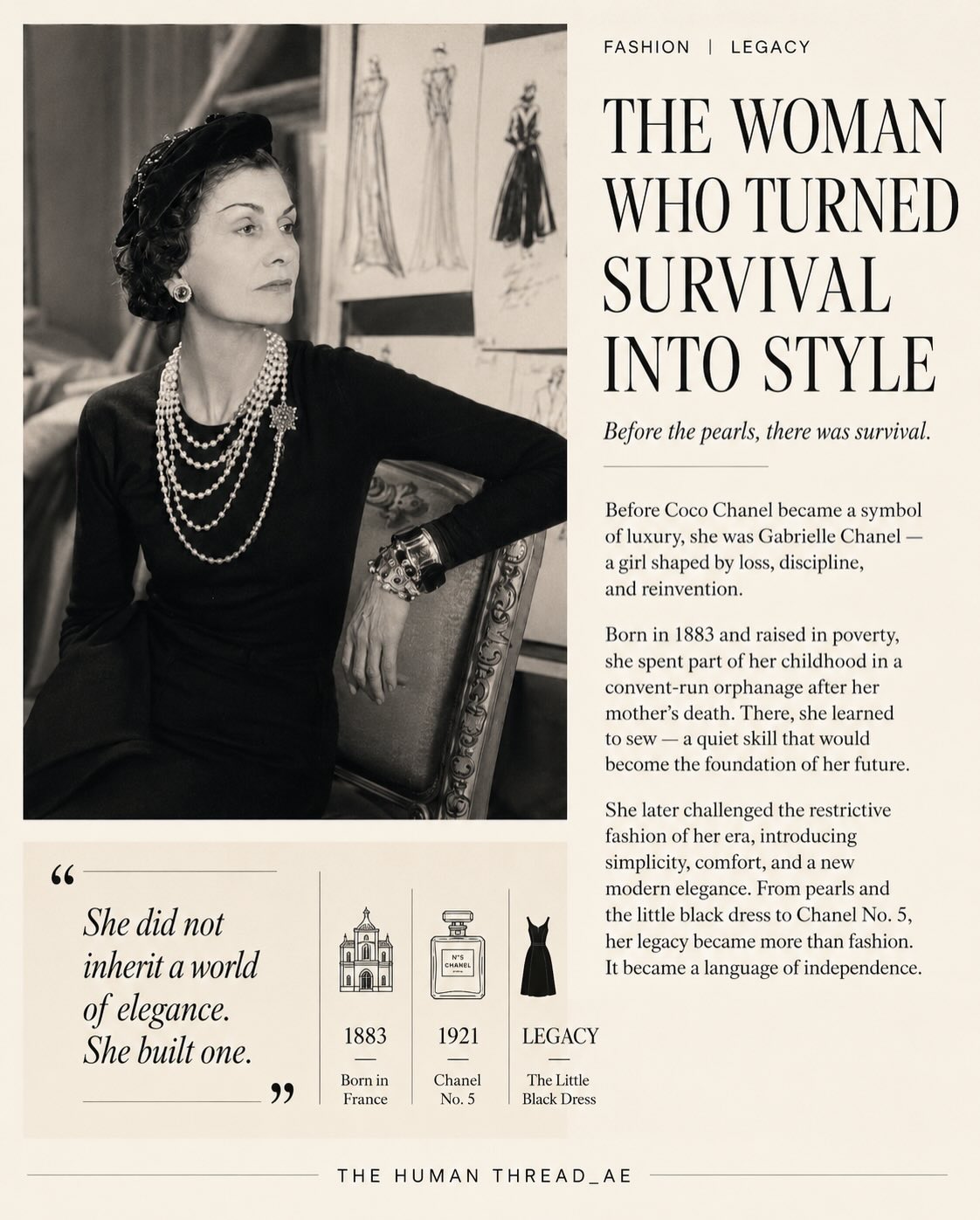
She did not inherit a world of elegance. She built one.
Long before her name became a symbol of luxury, Gabrielle Chanel was quietly reshaping the language of fashion. She understood that women did not need to feel restricted to look elegant. At a time when style was often rigid and uncomfortable, she introduced clean lines, softer fabrics, and a modern silhouette that allowed women to move more freely. Her work turned simplicity into a statement.
She did not follow fashion so much as question it. In 1910 she opened her first hat boutique; by 1921 she had introduced Chanel No. 5. From jersey pieces and layered pearls to that perfume and the little black dress, she replaced restriction with freedom, comfort, and a new kind of modern elegance. Each piece argued, in its own way, that a woman could look refined without being confined.
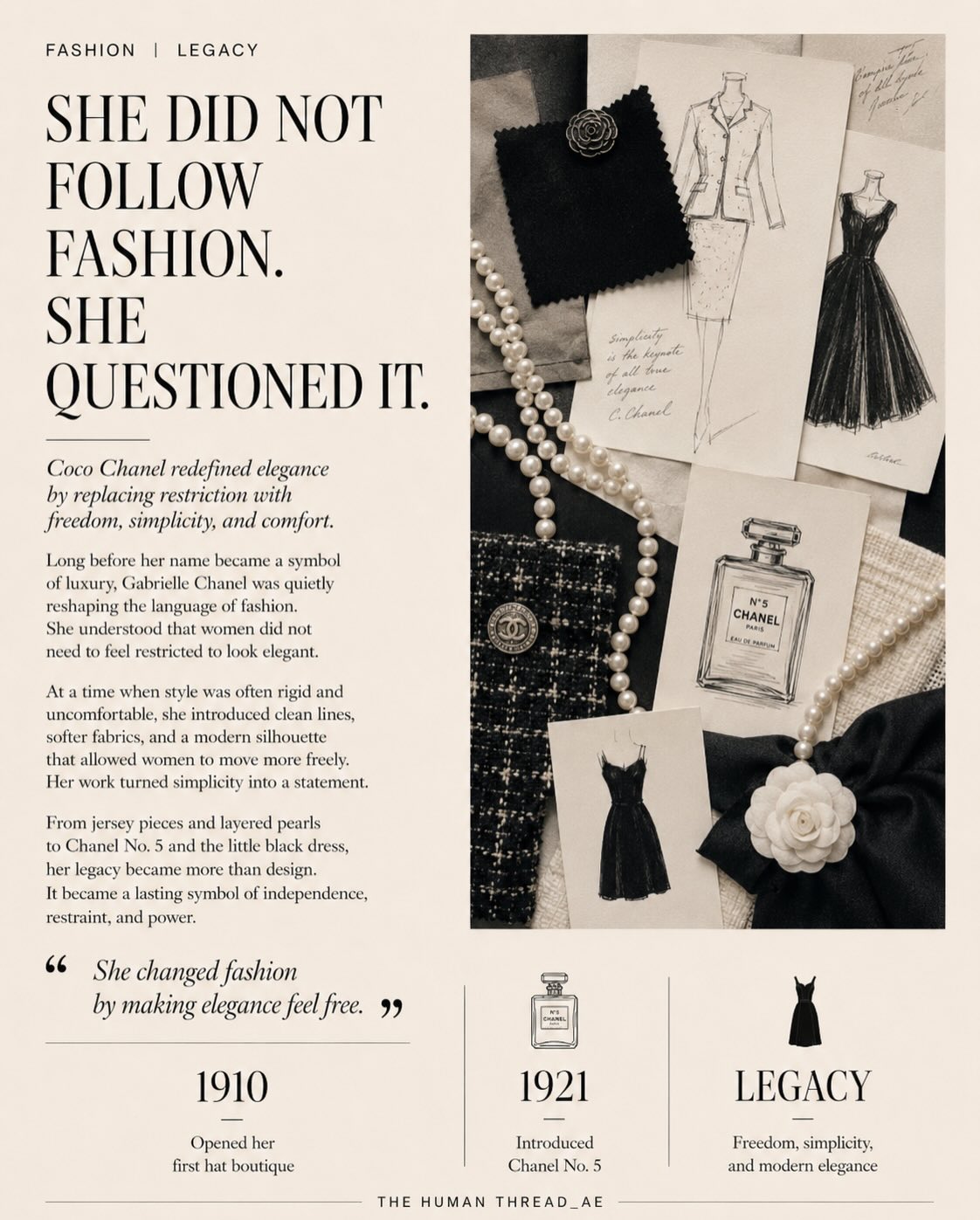
Her legacy became more than fashion, and more than design. It became a language of independence: of restraint, of power, of elegance made to feel free. She did not inherit a world of elegance. She built one, and then she handed it on, still legible more than a century after a girl in an orphanage first learned to sew.